

Technology practitioners discussing an architecture and ownership trade-off

How we work

Keep decisions, delivery, and operation in the same system.

Skymind helps technology leaders move from uncertain system pressure to a controlled change path with explicit trade-offs, evidence, and ownership.

Technology leaders discussing an enterprise architecture plan

The gap we address

Technology change breaks where responsibilities stop connecting.

Architecture can ignore transition. Delivery can ignore operation. Staffing can add activity without adding ownership. The resulting gaps appear later as delayed decisions, fragile releases, support demand, and systems nobody feels able to change.

We organize the engagement around one operating context: the decision that matters, the system boundary, the people affected, the evidence required, and the responsibilities that continue after release.


Working rules

Principles that change how the work is shaped.

01

Context before prescription

Understand the decision, people, system, constraints, and operating pressure before proposing a technical answer.

02

Evidence before certainty

Test important assumptions and make limitations visible before dependency and investment narrow the available choices.

03

Ownership before handoff

Name who decides, changes, supports, recovers, and improves a capability throughout the engagement.

04

Transition before target

Design the route from current behavior with the same care as the intended architecture.

Engagement roles

Responsibilities are defined around the mission, not invented personalities.

01

Outcome sponsor

Keeps the operating reason for change visible and resolves decisions that cross organizational boundaries.

02

Engagement lead

Connects scope, evidence, dependencies, risks, decisions, communication, and service transition.

03

Architecture lead

Makes system boundaries, trade-offs, data authority, controls, and transition consequences explicit.

04

Delivery lead

Shapes thin increments and keeps quality, release, operating readiness, and flow in one delivery view.

05

Security and data leads

Embed proportionate control, access, privacy, quality, and decision evidence into the work.

06

Capability lead

Adds the specialist skills the mission needs while protecting team context, continuity, and knowledge transfer.

Delivery practice

Use artifacts and evidence to make collaboration concrete.

System maps, decision records, working software, test evidence, telemetry, runbooks, and review create a shared view of progress and unresolved risk.

Skymind culture scene showing collaborative engineering work
Skymind culture scene showing a focused team discussion
Skymind culture scene showing colleagues solving a technical problem
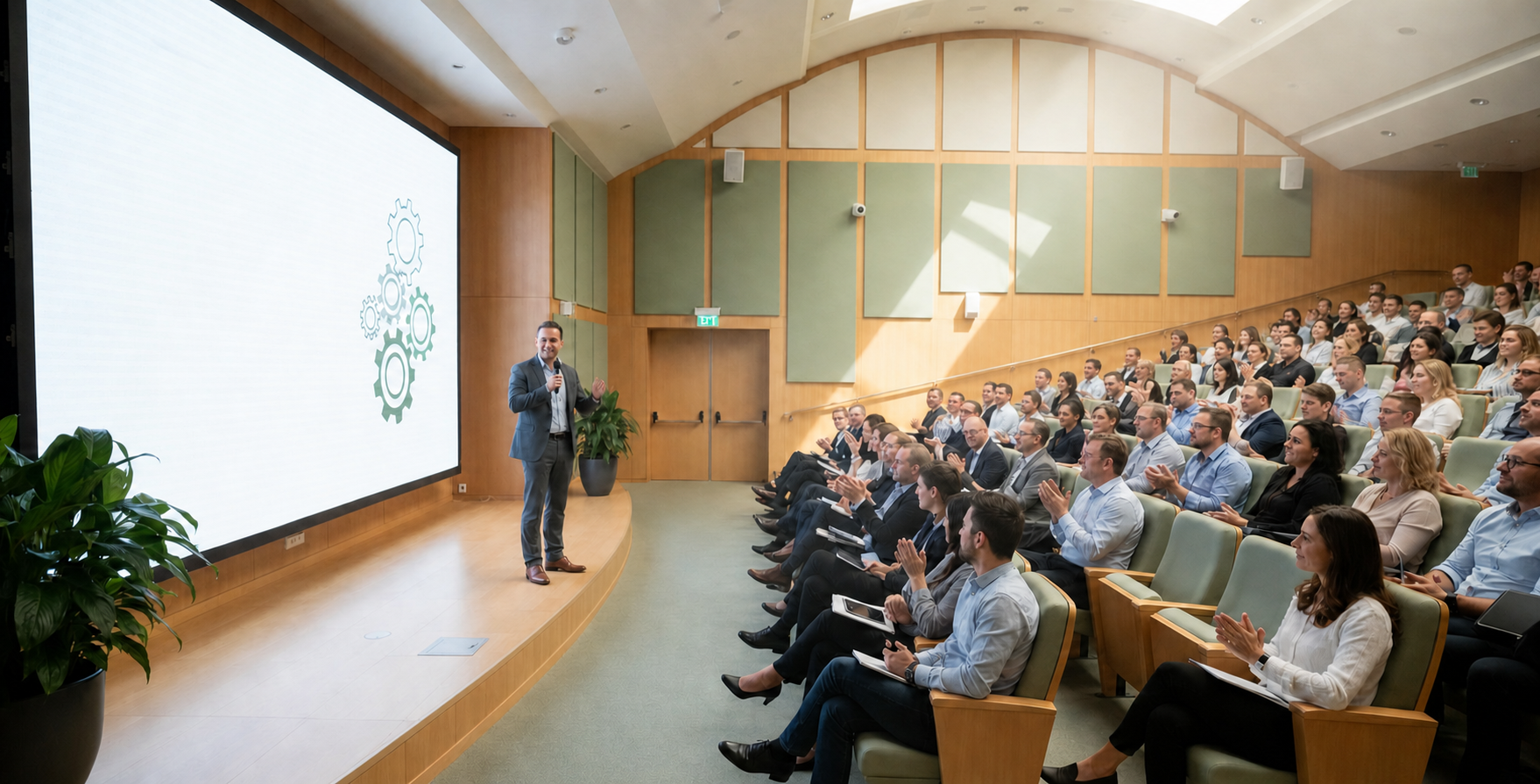
Presenter addressing an audience in a modern auditorium
Skymind culture scene showing an engineering planning session
Skymind culture scene showing colleagues sharing delivery insights
  1. 01

    Frame

    Name the pressure, decision, users, system boundary, constraints, and evidence that matter.

  2. 02

    Choose

    Compare credible paths and make trade-offs, dependencies, reversibility, and ownership visible.

  3. 03

    Change

    Deliver a bounded increment that tests the architecture and the organization's ability to operate it.

  4. 04

    Learn

    Use adoption, service behavior, support demand, and user feedback to guide the next decision.

Start a conversation

Bring the system context into the first conversation.